Thursday, August 14, 2014

World literature in the 19th century

I continue to make my way through Peter Goßens' books Weltliteratur: Modelle transnationaler Literaturwahrnehmng im 19. Jahrhundert. What I find interesting is the centrality of Goethe in literary and political discussions of the 1830s. The concept of world literature, for instance, in Goethe's lifetime already, played a role in utopian thinking among German writers and among proto-socialists and other sundry spirits hoping to reform society.

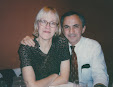
Sue admires the tree

Goethe scholar before large tree
 Prominent among these were the so-called "Young German" poets. A critic of Young Germans, because of their cosmopolitan orientation, was the critic Wolfgang Menzel. For Menzel, according to Goßens, Goethe was "eine Macht in Deutschland, eine dem äußern Feind [i.e., the French] in die Hände arbeitende, einer erschlaffende, auflösende Kraft, unser böser Genius, der uns mit einem phantastischen Egoismus, mit den Genüssen des Scheins and der Selbstvergötterung über den Verlust der Religion, des Vaterlands und der Ehre täuschte," and who made Germans to "Schwächligen ... während wir des Heldenmuths an meisten bedurften."

Very strong words

When I got home last evening there were more food gifts from my neighbor Wendy, beets from her garden and blueberries. Today I went out with the ladies for the Thursday morning walk. We went to see the largest tree in Sointula. On the way back, one of the ladies, Yolanna, gave me a bouquet of sweetpeas from her garden.

Monday, August 11, 2014

Sointulan abundance

After a week I am noticing the benefits of a lack of distraction. There is no excuse not to get some work done. Of course, I go out for my kayak paddles and walks and even meet people and have tea or dinner. This afternoon, after a productive morning, I walked down to Heather's. Her house in on the beach, and the kayak I am using is in her back yard The tide was so high went I got there that all I had to do, beside hoisting the boat over a huge log, was throw it in the water and get in. It was another beautiful day on the water. The Sointulans seems somewhat superstitious about the weather. You get the feeling they think they have it too good.Well, they are Scandinavians, sort of.


Yesterday Sue and her husband brought by some salmon they had just caught (and, fortunately for me, fileted). And this morning my neighbor Wendy cut the sunflowers and chard from her own garden and gave me the plums as well from a friend's garden. Sointulans, she said, like to share their abundance.

Sunday, August 10, 2014

Utopias, then and now


Dragon boating in Sointula (I'm in the back, in orange life vest)
Sointula, where I am staying this month of August, was founded as a utopian community. As I have posted earlier, it was settled by socialist Finnish laborers at the beginning of the 20th century. According to the website of the Sointula Museum, "Sointula began as the desire of a group of Finnish immigrants working in the Nanaimo area coal mines at the beginning of the 1900’s for a self-sustaining place of their own." They founded the company Kalevala Kansa, and an advance party took possession of Malcolm Island in December 1901 (yes, I know, but they were Finns, right?), 28,000 acres in all. Many of the colony's newcomers were attracted by the ideals of communal ownership, decision making by consensus, equal pay for women and a separate children’s home. Unfortunately, tragedy struck in 1903, when the communal building caught fire. Eleven people died. By 1905 the group was unable to overcome insuperable problems, and the Kalevala Kansa was dissolved, with the island's ownership reverting to British Columbia. Nevertheless, many of the Finns stayed on, and it is from these roots that the present Sointula has developed and grown.

When I left New York I brought along a few old copies of the Times Literary Supplement, which I meant to read on the flight to Vancouver. I only got around today to looking at one of them, in which I found a review of a book entitled Pauperland: Poverty and the Poor in Britain. Its author, Jeremy Seabrook, while exercised by the condition of the poor, is more irate that the poor are attracted by the life styles and habits of the rich and famous. It is not enough that (according to the review) "all wealth, not merely that displayed conspicuously, has been accumulated on the backs of poor people." Worse is that the poor (and all of us, when it comes down to it) "cannot," quoting Seabrook, "get enough of [rich people's] multiple homes, guarded islands,  ... their celestial loves and epic tragedies; even their faliled relationships and expensive divorces, public detox and private rehab," etc., etc.

Empty dragon boat at Sointula marina (click pics to enlarge)
To cure this infatuation, Seabrook proposes that wealth be subjected to contempt, with "the mansions of the wealthy 'mouldering unregarded, the gaze of indifference wandering over their exorbitance'" and all their "jewels, furs, yachts and private islands becoming emblems of dishonour and betrayal, 'their inert beauty being met, not with adulation, but with the careless glance and neutral shrug.'"

Now, where have I heard that before? Yes, in book 2 of Thomas More's Utopia (1516), which describes the contempt of the inhabitants for precious metals. As More writes:

They eat and drink from earthen ware or glass, which make an agreeable appearance though they be of little value; while their chamber-pots and close-stools are made of gold and silver; and this not only in their public halls, but in their private houses. Of the same metals they also make chains and fetters for their slaves; on some of whom, as a badge of infamy, they hang an ear-ring of gold, and make others wear a chain or a coronet of the same metal. And thus they take care, by all possible means, to render gold and silver of no esteem. Hence it is, that while other countries part with these metals as though one tore-out their bowels, the Utopians would look upon giving-in all they had of them, when occasion required, as parting only with a trifle, or as we should esteem the loss of a penny.

Thursday, August 7, 2014

Outing to the lighthouse

I have settled in and am getting to know some residents, of which there are about 500. This morning I went out with some ladies who "walk" on Thursday mornings. We went to the lighthouse at Pulteney Point, which involved driving over very rough roads built for loggers. The map above actually indicates how few roads there are here. The walking part was on the beach. When I returned a good fairy had left a bunch of basil for me. Below some more pictures.

Pulteney Point Lighthouse


The Goethe scholar

Beach finds


The cemetery shows Sointula's socialist roots


Monday, August 4, 2014

A working vacation

I have arrived in Sointula (see upper right corner of above map of Vancouver Island), the site of the conference at which I gave a paper last September on 18th-century utopian thinking. Back then I fell in love with a cottage, which I have now rented for the month of August. I have three writing goals: a larger book on which I have been working for some time, and two book reviews, one of the last on a Goethe-period topic. My other reason for picking this location was the kayaking opportunities. Two days ago I also joined a dragon-boating group. So, I am hoping for a productive month. Below are some pictures of my new residence. (Click to enlarge.)

The cottage

View from balcony
Basil on the balcony


The kitchen: so much counter space compared to Manhattan!

Some essentials
More essentials

Another view of the cottage
 
And not to forget: my work space!

Monday, July 14, 2014

Interesting sight

"Regenschirm Panorama" via FAZ
Berlin, July 13, 2014: How the world does turn.

Thursday, July 10, 2014

The Cosmos and I


One comes across Goethe in the darndest place, as I have often discovered. My husband, Rick, taught physics and had a huge library of books on the history of science, his special interest. I have been going through these books and listing the more valuable ones on Amazon for sale. A few days ago I received a request for The Mechanization of the World Picture: Pythagoras to Newton, published in 1950 by the Dutch historian of science E.J. Dijksterhuis. (First English translation, 1960.) Paging through it I came across a footnote in section 108 in which appears the poem Goethe wrote after his ascent of the Brocken in 1783:

Wär' nicht das Auge sonnenhaft,
Die Sonne könnt es nie erblicken;
Läg nicht in uns das Gottes eigne Kraft,
Wie könnt' uns Göttliches entzücken?

 The poem comes up in Professor Dijksterhuis's discussion of astrology in the ancient world. Apparently, the Babylonian legacy of "star science" was systematized by the Greeks, especially by the Old and Middle Stoa.

 Stoicism, he writes, "taught people to view the world as a living being, endowed with reason and feeling. ... Man is a microcosm, a small-scale image of the whole, which he would not be able to know if he were not essentially akin to it. It is the thought which Maniliu was aferwards to express in the verses: Quis coelum possit nisi coeli munere nosse et reperire Deum nisi qui pars ipse Deorum est." There follows the footnote reference to Goethe's poem, which, he writes "voice[s] an essential elements of [Goethe's] natural philosophy."

Persian astrologer Mashallah ibn Athari
At the end of this chapter Dijksterhuis mentions a difference of opinion that divided the minds of ancient men, namely, "whether the celestial bodies themselves actually affect events on earth by their influence or whether they merely act as omens announcing those events." Many thinkers, after all, thought it incompatible with free will and responsibility "that men's characters and fortunes should be influenced by celestial bodies," even if they were unable to give up the theory of the relation between terrestrial and celestial events, "which was universally accepted and supported by the greatest authorities."

So, where did Goethe stand on this question?

Picture credits: Information is Beautiful; Who Guides; Staff Science