Monday, May 26, 2014
In memorium
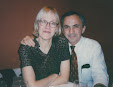
Clearly I have been lazy about posting lately. This is a hard day for me, Memorial Day, since Rick and I always went to the Soldiers and Sailors Monument, just a block away from our apartment on Manhattan's Upper West Side, for the day's festivities. The mayor and the local council member officiate; there are lots of vets present as well as a notable speaker who enlightens us about the occasion. The last time we went was three months before Rick was diagnosed, and I wrote a post about the event, when the Lincoln historian Harold Holzer spoke. This morning I can hear the bagpipers playing at the Monument, but I have never been able to go back on Memorial Day. Instead, let me post this lovely photo, by "Miss Francie Pants," which was posted today on one my favorite food blogs: the Pioneer Woman.
Saturday, May 10, 2014
Alexander von Humboldt in Manhattan
| Alexander von Humboldt in his library (Eduard Hildebrant, 1856) |
The exhibit included a painting by the German artist Johann Moritz Rugendas (1802-1858), on whom I reported in an earlier post. Rugendas was the subject of a novella by the Argentinian writer Cesar Aira, which documents the recent fascination of contemporary writers (e.g., Daniel Kehlmann) with Humboldt. Naturally I loved the portrait of Humboldt in his library.
Picture sources: Princeton U. Thematic Maps; Cerebro.com
Friday, May 9, 2014
World literature and the "sick, sad world"
Returning to the subject of my previous post, I do agree with critics of world literature when they speak of the "entrepreneurial, bulimic drive to anthologize and curricularize the world's cultural resources." That quote is from a review by Gloria Fisk of Emily Apter's book Against World Literature. Apter's "beef" seems to be with the idea that such anthologies assume that literature is "translatable," whereas a translation of, say, Dante's Commedia, is in no way commensurate with the original. Duh!
Apter's argument, as per the n+1 critics mentioned in the previous post, is a critique of the nexus between world literature and the economic processes of globalization. The anthologies thus obscure what Fisk calls the "extra-literary implications" of world literature, i.e., the links between "the commercial, the literary, and the curricular." Again, duh!
These critics are belatedly proclaiming what Pascale Casanova already laid out in wonderful detail in The World Republic of Letters, in particular, that literatures existing on the margins, if they are to become commercially successful, follow the trends set by the center. Casanova discussed the way that literary reputation in the 19th century followed what had been blessed with success in Paris. (For a Frenchman, France is still the center of the world.) An example in our present time would be Salman Rushdie, who is probably more popular in the West than in India. Rushdie's subject, at least in Midnight's Children, was the effect of the processes, first unleashed in the European world, that have undermined and transformed the traditional order of society. Those processes have been market-driven. We live in a capitalist world, and it is not surprising that literary "products" are marketed the same way as other products in the marketplace. And that there is competition.
If we wish to preserve literature, to set it apart from transient market products, we must insist that the literary heritage preserves "values" that are worth preserving. Those works that we consider great are foundational to civilization. The past was never a golden age, but in the long stretch of history, certain values have been transmitted, even during the most terrible cataclysms. Their survival suggests that they are essential to the human condition and, indeed, to the continuance of civilization: love of family, sacrifice for others, courage, self-discipline, self-reliance, inner cultivation, patriotism. Aristotle summed them all up long ago, and no one has improved on them. (To judge by this world literature reader for 10th-graders, these anthologies are introducing students to these values.)
As Marilynne Robinson writes in her recent collection of essays, "The great truth that is too often forgotten is that it is in the nature of people to do good to one another." But what if such goodness is in conflict with other values? Thus, a major preoccupation of the Western literary tradition, since Sophocles and the Old Testament, has been what the Marxist critic Georg Lukács called the breach between inner and outer worlds. Antigone and Oedipus may have had fewer distractions, but the condition of the individual under advanced capitalism, despite a panoply of choices, is in essence the same. When push comes to shove, one is often still faced with choosing between incompatible alternatives, between what we love or desire and what we are required to do. The world, it seems, has always been a "sick, sad place," one in which literature and art recall us to our better selves.
And what has been the academic response to this inheritance? An attack on the literary patrimony, which has been rechristened as "patriarchy." It is not only "capitalist structures" (as Fisk writes) that inflict "violence" on the world; violence is inflicted daily on our own literary and, indeed, cultural inheritance in college classrooms.
Apter's argument, as per the n+1 critics mentioned in the previous post, is a critique of the nexus between world literature and the economic processes of globalization. The anthologies thus obscure what Fisk calls the "extra-literary implications" of world literature, i.e., the links between "the commercial, the literary, and the curricular." Again, duh!
![]() |
| Paris on a Rainy Day, by Gustave Caillebotte (1877) |
If we wish to preserve literature, to set it apart from transient market products, we must insist that the literary heritage preserves "values" that are worth preserving. Those works that we consider great are foundational to civilization. The past was never a golden age, but in the long stretch of history, certain values have been transmitted, even during the most terrible cataclysms. Their survival suggests that they are essential to the human condition and, indeed, to the continuance of civilization: love of family, sacrifice for others, courage, self-discipline, self-reliance, inner cultivation, patriotism. Aristotle summed them all up long ago, and no one has improved on them. (To judge by this world literature reader for 10th-graders, these anthologies are introducing students to these values.)
![]() |
| Antigone and the body of Polynices |
And what has been the academic response to this inheritance? An attack on the literary patrimony, which has been rechristened as "patriarchy." It is not only "capitalist structures" (as Fisk writes) that inflict "violence" on the world; violence is inflicted daily on our own literary and, indeed, cultural inheritance in college classrooms.
Monday, May 5, 2014
World literature in a "sick, sad world"
![]() |
| "Making the Good Book Safe for Capitalists" |
Anyone who has read this blog may have recognized that I stand somewhat apart from the political consensus of the culturati. I am drawn to the 17th and 18th centuries, especially the Enlightenment, because of the appeal to reason and to critical thinking. Reason and critical thinking, however, are simply categories for evaluation, tools for navigation in the modern world of change and uncertainty. In this world there are, as it were, only goods now, not the Good, no certainties to guide us. I don't hold with those philosophes or intellectuals of the 18th century who imagined that technology and science would lead to a world of consensus, one absent inequities, but we in the West at least have managed to pull off a good trick. I am also not an optimist that the rest of the world can be peacefully brought up to the standards of the West -- although I just read the other day, something I find a bit hard to believe, that the "average" Chinese now earns what the "average" American earned in the 1950s -- but the modern industrial order seems inexorably to be making the world alike in that respect. I guess this makes me a conservative.
I am continually taken aback at how many people in the literary world, people who care about literature and the arts generally, as I do, are against this ameliorating vision. Indeed, they are reflexively leftist. One of the "benefits" of getting a Ph.D. was to discover the roots of this reflexive tendency at its source, the university. Anyone who is not of this persuasion has the feeling that leftist thinking has been imbibed with the mother's milk and become naturalized. In other words, one is imprisoned in a mental paradigm that is, simply put, self-evident. No "right-thinking person" would think differently.
![]() |
| "Hands of Unity" by Dick Termes |
The n+1 "critique" is very Frankfurt School, recommending a project of "opposition to prevailing tastes." The editors believe that the major international authors have thrown in the towel as far as contributing to radical change. Instead, "a smooth EU-niversality prevails." What they call "World Lite" now "has its own economy, consisting of international publishing networks, scouts, and book fairs. ... And it has a social calendar full of litrary festivals, which bring global elite into contaact with the glittering stars of World Lit." And what happens at these festivals?
"No debate; no yelling; some drinking; lots of signing of books. They are like peace conferences, though the national constituencies haven't been consulted."
As I mentioned above, the editors of n+1, like most of the Left, believes that literature should heal the world; that it does not to so appears to lead to despair, evidenced by a book by Emily Apter (with a tenured position at NYU, certainly part of the elite global village decried by n+1) entitled Against World Literature. I won't review it in this post, but it is, as Apter puts it, an "anti-capitalist critique" invoking the usual specters -- capitalism and the global economy. This critique has a long heritage, going back to Marx and pervading the 19th century, though the belief in literature's power to make the world a better place is rooted in Goethe's pronouncements. Goethe of course was cautious about what he called world literature, and his comments on Saint-Simon's followers in his letters to Carlyle and elsewhere suggest he would not have been a socialist.
I have gone on too long and will return to this topic soon. Stay tuned.
Picture sources: Brane Space; Times of Malta
Wednesday, April 30, 2014
World literature and industrialism
![]() |
| Yang Jiechang, Crying Landscape: Three Gorges Dam (2002) |
Some works I saw yesterday at the Metropolitan Museum of Art highlight this rush forward. They include a huge triptych banner by Yang Jiechang, showing the Three Gorges Dam on the Yangtze River. (Click to enlarge; it is really gorgeous.) I am trying to decide whether the setting could be considered "sublime."
Picture credit: Mario Naves
Tuesday, April 22, 2014
World literature and food prices
World literature takes me very far afield at times. Take the case of an article in The Guardian entitled "We don't value food because it is not expensive enough." What, one may ask, does the price of food have to do with world literature? I will try to explain, but, first, to the article, which intrigued me: anyone who has been to the grocery store lately, after all, finds that food is too expensive. I have been wanting to make leak soup for two years, but the price hereabouts, $2,99 a pound even in summer, is prohibitive. And zucchini at $1.99 a pound?
The article features a British woman who owns and runs a 117-acre "former council" farm where she raises sheep and engages in "animal husbandry. According to the article, Britain once had 16,000 such council farms, small parcels of land rented out to farming families or individuals who didn't have their own land, but that are now being sold off. (So, for those of you wanting to get out of academia and get back to the land, here is an opportunity.) She was prompted to buy the farm by the following question: "Do we want everything to be imported, to deny our farming heritage, to get rid of every opportunity for young farmers?"
Even those of us who have made their accommodation with modern mechanical civilization cannot but lament the disappearance of humans' former connectedness to "the land." Indeed, if you read Marx and Engels carefully, esp. their early writings, you can discern a desire for something less rationalistic and technological, in fact the suspicion that reason and science are not the answer to the human condition. Engels, in his essay on "Socialism: Utopian and Scientific," writes of the pre-capitalistic era, when a craft worker could say: "I made that; this is my product." It strikes me that Marxism's "scientific socialism" simply systematized Romanticism, especially a desire for an organic society.
We who live in the affluent West, however, have the "luxury" to experience what we believe to be a more "organic" way of life. My own Boomer generation seems at times immensely alienated from all that has made our lives safe and comfortable. If we like, we can actually choose hardship: buy farms and carve out a new way of life for ourselves. If people don't have it in them to go back to nature and live, they buy "organic" foods or create living spaces that express an ethos that signifies their rejections of the larger industrial order. Personally I have nothing against such decisions; it is the upside of the affluent modern order that we can fashion our own destinies. And many of the small enterprises that people create through their hard work lead to employment for many other people, not to mention good coffee and food. I only hope that our government doesn't tax us so highly that future generations will be deprived of what we are so fortunate to enjoy.
Now, to the price of food and world literature.
Goethe's remark that a foreign literature helps a nation to understand itself was prescient in an unintended way: on a mundane level novels as well as fashion journals were creating a desire to know how others were eating and drinking and dressing as well as the aspiration to imitate new fashions. Supranational trade and commerce began to unite the bourgeoisie of the different European nations in their tastes, contributing to an incipient cultural product, i.e., "Europe," that was alike in its eagerness for foreign products as much as for translations of foreign literatures. One result of such commerce is products that efface national differences. I remember when you used to be able to tell Germans and French apart by the way they dressed; no more. Even Hollywood movies are increasingly made for an international market and, as has been remarked, often have little to do with American "values."
Another effect of such global commerce is that prices for commodities become increasingly lower and the products more widespread. Who could afford a personal computer thirty years ago? Only the wealthy. But now everyone can have one. Despite what I consider the prohibitive (for me) high monthly charge for iPhones or cell phone use, I notice that many people who might be considered poor have these devices. Prices for food may be higher in Manhattan where I live, but apparently in other parts of the West they are not. Thus, the complaint of the woman profiled in The Guardian. She wants people to pay more for food, because, she asserts, there is too much waste.
Well, no one who has eaten in a Manhattan restaurant can deny our wastefulness in regard to food. Affluence and a rising standard of living don't make people spartan or make them value what they don't have to struggle for. We take a lot for granted. Historically most people have struggled to feed and clothe themselves; do we wish to return to struggling? From what I have read, a fall in the rate of mortality in the late 18th and early 19th century led to an increase in population and thus the pressure to feed people. Capitalism rose to the challenge in the 19th century, and the result today is the multinational food enterprise.
Picture sources: 100 Red Flags; Enterra Solutions
The article features a British woman who owns and runs a 117-acre "former council" farm where she raises sheep and engages in "animal husbandry. According to the article, Britain once had 16,000 such council farms, small parcels of land rented out to farming families or individuals who didn't have their own land, but that are now being sold off. (So, for those of you wanting to get out of academia and get back to the land, here is an opportunity.) She was prompted to buy the farm by the following question: "Do we want everything to be imported, to deny our farming heritage, to get rid of every opportunity for young farmers?"
Even those of us who have made their accommodation with modern mechanical civilization cannot but lament the disappearance of humans' former connectedness to "the land." Indeed, if you read Marx and Engels carefully, esp. their early writings, you can discern a desire for something less rationalistic and technological, in fact the suspicion that reason and science are not the answer to the human condition. Engels, in his essay on "Socialism: Utopian and Scientific," writes of the pre-capitalistic era, when a craft worker could say: "I made that; this is my product." It strikes me that Marxism's "scientific socialism" simply systematized Romanticism, especially a desire for an organic society.
We who live in the affluent West, however, have the "luxury" to experience what we believe to be a more "organic" way of life. My own Boomer generation seems at times immensely alienated from all that has made our lives safe and comfortable. If we like, we can actually choose hardship: buy farms and carve out a new way of life for ourselves. If people don't have it in them to go back to nature and live, they buy "organic" foods or create living spaces that express an ethos that signifies their rejections of the larger industrial order. Personally I have nothing against such decisions; it is the upside of the affluent modern order that we can fashion our own destinies. And many of the small enterprises that people create through their hard work lead to employment for many other people, not to mention good coffee and food. I only hope that our government doesn't tax us so highly that future generations will be deprived of what we are so fortunate to enjoy.
Now, to the price of food and world literature.
Goethe's remark that a foreign literature helps a nation to understand itself was prescient in an unintended way: on a mundane level novels as well as fashion journals were creating a desire to know how others were eating and drinking and dressing as well as the aspiration to imitate new fashions. Supranational trade and commerce began to unite the bourgeoisie of the different European nations in their tastes, contributing to an incipient cultural product, i.e., "Europe," that was alike in its eagerness for foreign products as much as for translations of foreign literatures. One result of such commerce is products that efface national differences. I remember when you used to be able to tell Germans and French apart by the way they dressed; no more. Even Hollywood movies are increasingly made for an international market and, as has been remarked, often have little to do with American "values."
Another effect of such global commerce is that prices for commodities become increasingly lower and the products more widespread. Who could afford a personal computer thirty years ago? Only the wealthy. But now everyone can have one. Despite what I consider the prohibitive (for me) high monthly charge for iPhones or cell phone use, I notice that many people who might be considered poor have these devices. Prices for food may be higher in Manhattan where I live, but apparently in other parts of the West they are not. Thus, the complaint of the woman profiled in The Guardian. She wants people to pay more for food, because, she asserts, there is too much waste.
Well, no one who has eaten in a Manhattan restaurant can deny our wastefulness in regard to food. Affluence and a rising standard of living don't make people spartan or make them value what they don't have to struggle for. We take a lot for granted. Historically most people have struggled to feed and clothe themselves; do we wish to return to struggling? From what I have read, a fall in the rate of mortality in the late 18th and early 19th century led to an increase in population and thus the pressure to feed people. Capitalism rose to the challenge in the 19th century, and the result today is the multinational food enterprise.
Picture sources: 100 Red Flags; Enterra Solutions
Sunday, April 6, 2014
Goethe in the Veneto
| Villa "La Rotonda"in Vicenza |
Among the Seminar's eminent founders were Peter Gay, Rudolf Wittkower, and James Clifford, all Columbia professors. For a talk I gave on the history of the 18th-century Seminar on February 5, I did a little research in the Seminar's archives. The early presentations centered around the concept of "Enlightenment." In going through the minutes of early meetings, I discovered that one trend of the Seminar has been a move from "big ideas" to "culture studies," with the latter focusing on very narrow aspects of material life in the 18th century. This trend represents a larger trend in 18th-century studies generally. In the opening roundtable the historian Isser Woloch described the transition in Norton anthologies from a concentration on "Kings and Philosophers" in the 1960s, to more recent presentations of the 18th century as "dynamic." Thus, a focus on population studies, religious life, the slave trade, private lives, including the role of women, and so on.
![]() |
| Architectural rendering |
![]() |
| The "rotonda" |
Subscribe to:
Posts (Atom)